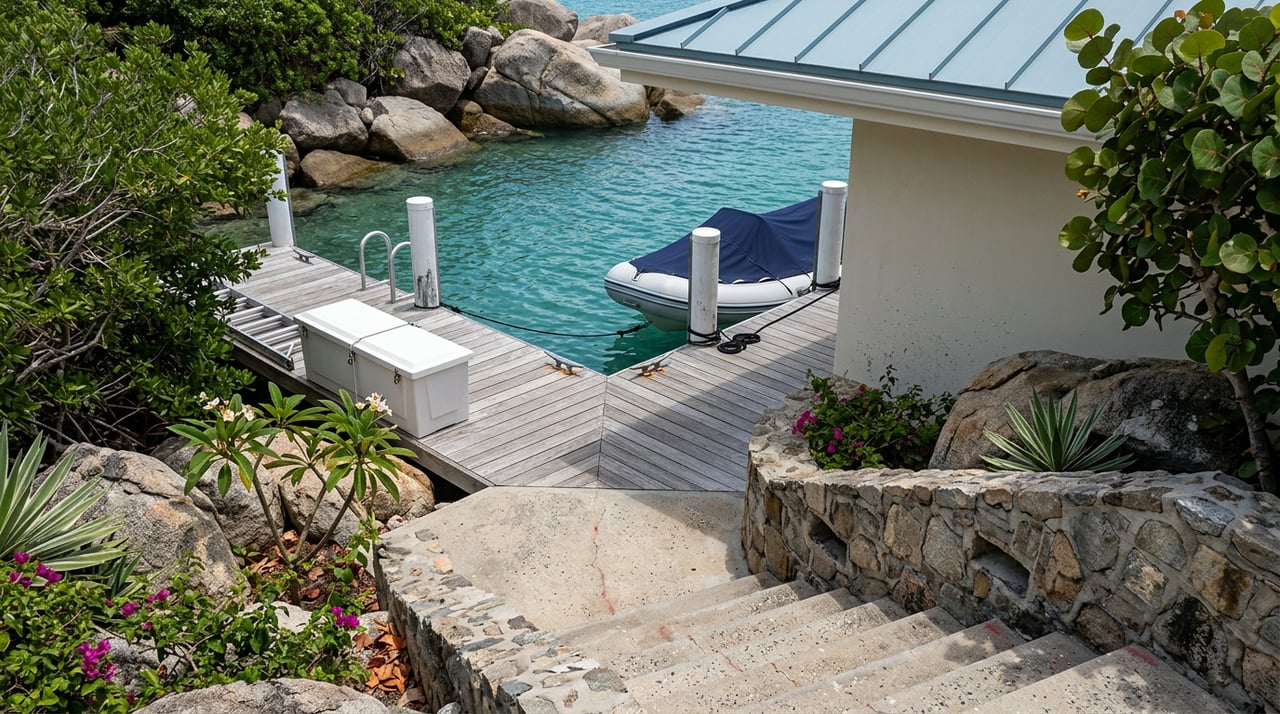
Picture this: you step off a runabout into a quiet private dock, the sea calm behind you and your hillside villa ahead. If you’re drawn to privacy and life on the water, Great Camanoe can feel like a dream. Still, a boat-access second home comes with unique logistics and costs. In this guide, you’ll get clear, practical insight into access, infrastructure, insurance, ownership costs, and buyer fit so you can decide with confidence. Let’s dive in.
Great Camanoe at a glance
Great Camanoe sits just north of Beef Island and northeast of Tortola in the British Virgin Islands. It is a small residential island with a recorded population of 6 in the 2010 census, and access is by private boat only. You’ll hear two main residential areas referenced: Indigo Plantation and Privateers Estate on the southern side. For a quick primer on place and context, see the overview of Great Camanoe.
Access and transfer times
Most owners travel via Trellis Bay on Beef Island, near Terrance B. Lettsome International Airport. Private boat or water taxi transfers typically run about 5 to 20 minutes depending on where you land and sea conditions. Expect runabout-style transfers rather than a public car ferry. Always confirm exact timing with your preferred operator.
Anchorages and marine rules
Cam Bay and Lee Bay are the best-known nearby anchorages. Cam Bay is a National Parks Trust site with day-use moorings and conservation rules, so understand time limits and no-anchoring zones before you arrive. Review current guidance from the BVI National Parks Trust if you plan to bring or host boats.
Daily life: services and infrastructure
Think of Great Camanoe as a private residential island rather than a serviced town. You rely on a mix of estate-managed docks, private utilities, and nearby mainland services at Trellis Bay, Scrub Island, and Road Town. This is part of the appeal for many owners who value seclusion, but it does require planning.
Docks, slips, and moorings
Properties often include access to shared community docks or marina facilities. Some owners have assigned slips or seabed and mooring licenses tied to their estate. If a home advertises a slip or mooring, verify the title documentation, transferability, and any HOA rules during due diligence. For long-term boat storage, use your community marina or a nearby commercial marina rather than public park moorings.
Water, wastewater, and power
- Water. Most homes use roof-catchment cisterns with substantial on-site storage. Higher-end properties may include small desalination units. Budget for periodic cistern cleaning and have a drought plan.
- Wastewater. On-site septic is standard in the BVI. Confirm suitability for any future additions and schedule routine maintenance.
- Electricity. You will see both off-grid systems and occasional claims of a direct grid feed. Off-grid setups typically combine solar, battery storage, and generator backup. Some listings assert an undersea cable connection to Tortola’s grid. Treat that as a verification item. Ask for utility bills and confirm the service directly with the electricity provider before you rely on it.
Internet and cellular
Mobile operators like FLOW and Digicel serve the BVI. Coverage is generally strongest near Tortola, Beef Island, and marinas. Some coves and interior sites can be weaker, so many owners blend mobile data with fixed wireless or satellite backups. It is smart to test connectivity at the exact home site. For a quick primer on practical coverage patterns, see this guide on staying connected in the BVI.
Boat ownership and everyday runabout logistics
If you choose Great Camanoe, plan on owning or arranging regular access to a small boat. Most owners keep a runabout at the community dock plus a utility vehicle on-island. Your annual budget should account for:
- Slip or mooring fees, plus HOA or dock assessments.
- Haul-out, anti-foul, and engine servicing schedules.
- Insurance for the boat, spare parts, and safety gear.
- Private transfers for guests when you are not captaining.
Sample private water transfers from Trellis Bay to Great Camanoe are commonly advertised in the range of about 50 to 150 dollars per trip, depending on vessel size and passenger count. Pricing varies, so confirm with local operators in advance. For nearby provisioning and dining at the gateway, explore Trellis Bay on Beef Island.
Hurricanes, insurance, and resilience planning
The 2017 Atlantic season, including Hurricane Irma, reshaped building choices and insurance practices across the BVI. Assume future hurricane risk is real and plan accordingly.
- Preparedness. The BVI Department of Disaster Management offers territory-wide guidance and an emergency alert app for residents and visitors. Register for alerts and set up a basic island supply kit and an evacuation or safe-harbor plan for boats. Learn more from the BVIDDM’s emergency alert app announcement.
- Insurance. Hurricane coverage is standard in local homeowner policies, but premiums, deductibles, and exclusions vary. Underinsurance and long-vacancy clauses are common concerns for second homes. Get quotes early and ask how boat-access and occupancy patterns affect your coverage. For general market context, review home and hurricane insurance information.
- Mitigation. Discuss impact-rated windows or shutters, robust roof tie-downs, concrete or masonry construction, and backup power and water systems with your architect, inspector, and insurer. Also plan for secure boat storage or storm-ready marina arrangements.
Property types, pricing, and what to budget
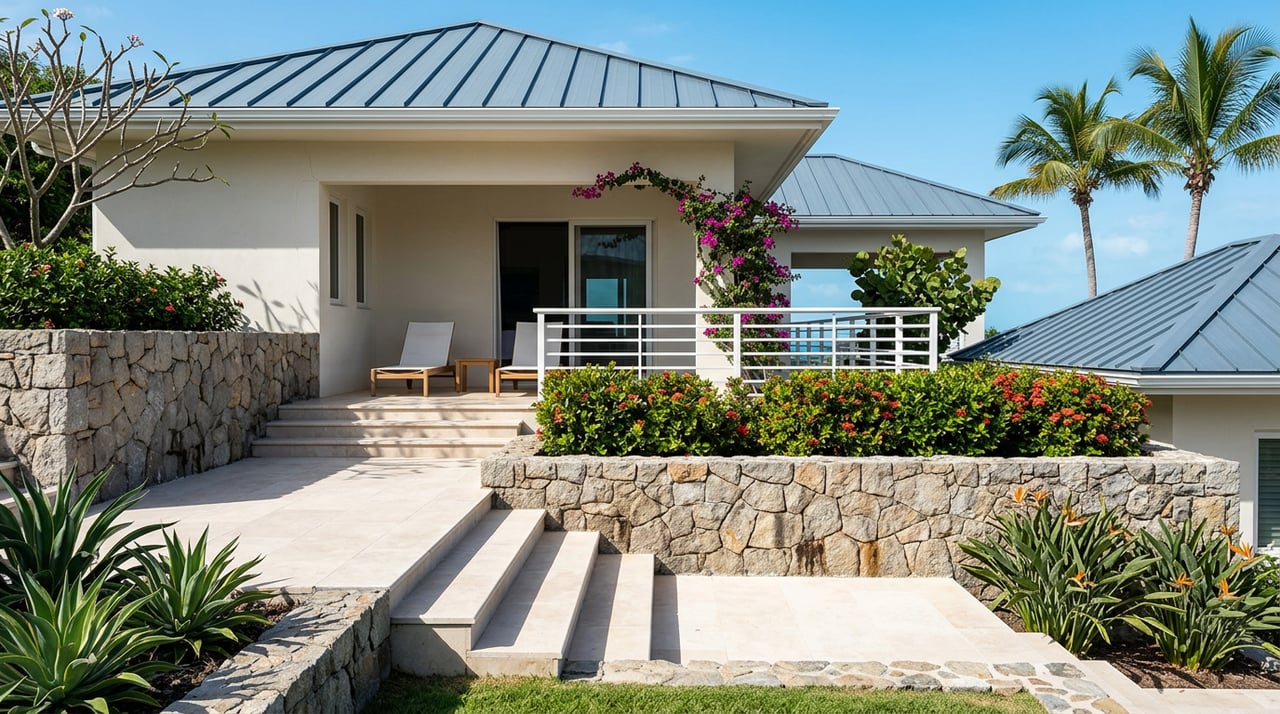
You will find small waterfront homes with private docks, multi-pavilion estates, elevated view lots, and the occasional larger renovated compound. Many properties promote multiple cisterns, on-site desal units, and storm-hardening features.
Public listing snapshots suggest a wide range, from about 1 to 2 million dollars for some villas, up to around 5.5 million dollars for refurbished waterfront estates, with select beachfront homes near 1.095 million dollars. Treat these as examples that change over time. Always confirm current availability and pricing.
Taxes, fees, and title basics
- Stamp duty and licensing. The BVI typically applies stamp duty on property transfers. Non-citizens often require an Alien Land Holding Licence, commonly cited around 5 percent of value. Confirm current rates and procedures with a BVI tax adviser or the government. For an overview, see the BVI section of the PKF Worldwide Tax Guide.
- Seabed and mooring licenses. If a sale includes a seabed or mooring license, verify transferability, renewal terms, and any annual fees in the title and seabed records.
Ongoing operating costs to plan for
- Routine. Generator fuel, solar-battery maintenance, cistern cleaning, septic pumping, internet and mobile data, dock or HOA fees, and island vehicle upkeep.
- Periodic. Haul-out, anti-foul, and engine service for your tender or runabout; repainting and deferred maintenance; vegetation control and path upkeep.
- Contingent and insurance. Hurricane premiums and windstorm deductibles, plus potential rebuild costs after a major event.
Is Great Camanoe a fit for you?
Great Camanoe tends to work best for buyers who love being on the water and are comfortable with marine logistics. You get privacy, protected coves, and quick hops to Trellis Bay, but you trade away in-town convenience.
You will likely thrive if you:
- Already own or enjoy operating a small boat.
- Value seclusion and a low-density residential setting.
- Visit seasonally and plan to keep a caretaker or local manager.
- Are prepared to maintain cisterns, septic, and power systems.
You may prefer a road-access island if you:
- Want daily access to shops, clinics, and services without a boat.
- Prefer not to manage a runabout or schedule water taxis.
- Need on-island schools or frequent in-person services.
There are no schools on Great Camanoe, and most owners rely on Tortola and Beef Island for provisioning and services. That is normal for small outer islands in the BVI.
Smart due diligence checklist
Use this short list to structure your evaluation and protect your timeline.
- Title and rights. Confirm legal title, any HOA or estate covenants, and the status of community docks, assigned slips, and seabed or mooring licenses.
- Utilities. Verify electricity claims directly with the utility company if a grid connection is advertised. Confirm solar, battery, and generator specs and service records. Test mobile coverage at the site and confirm internet options.
- Insurance. Get home and boat insurance quotes early. Ask about vacancy clauses, windstorm deductibles, and any documentation required after a storm.
- Water and wastewater. Inspect cistern capacity, plumbing, any desalination unit, and the septic system. Budget for routine cleaning and pumping schedules.
- Boat logistics. Price slip or mooring fees, seasonal haul-out, and engine service. Confirm water taxi availability and transfer pricing for guests.
- Resilience. Review structural design, materials, and any post-2017 rebuild records. Align mitigation features with insurer expectations and best practice.
If you want privacy, water-focused living, and quick access to the airport and marinas, Great Camanoe can be a compelling boat-access choice. With clear-eyed planning for utilities, insurance, and marine logistics, you can enjoy an easy island rhythm a few minutes from Trellis Bay.
Ready to explore available homes and get tailored advice? Connect with Christies BVI Residential for a private consultation.
FAQs
What makes Great Camanoe different from Tortola or Virgin Gorda?
- Great Camanoe is boat-access only, with a small number of private homes and shared dock infrastructure, while Tortola and Virgin Gorda offer road access, broader services, and in-town conveniences.
How long is the boat ride from Trellis Bay to Great Camanoe?
- Private transfers are typically 5 to 20 minutes depending on landing point, vessel, and sea state. Confirm timing with your operator for your specific route.
Are there public moorings I can use near Great Camanoe?
- Cam Bay is a National Parks Trust site with day-use moorings and conservation rules. For long-term storage, rely on your community dock or a commercial marina rather than park moorings. See the National Parks Trust guidance.
How reliable is internet and mobile service on Great Camanoe?
- Coverage varies by location. Properties near marinas and open water often see better mobile signals, while interior sites may need fixed wireless or satellite backups. Test at the exact home and review BVI connectivity tips.
What should I know about hurricane insurance for a second home?
- Hurricane coverage is standard, but policies can limit coverage for unoccupied periods and may carry higher windstorm deductibles. Get quotes early and confirm how boat-access and occupancy affect terms. For context, see BVI home and hurricane insurance information.